How Does AI-Enabled Teleradiology Work
Why Legacy Systems Are Holding You Back
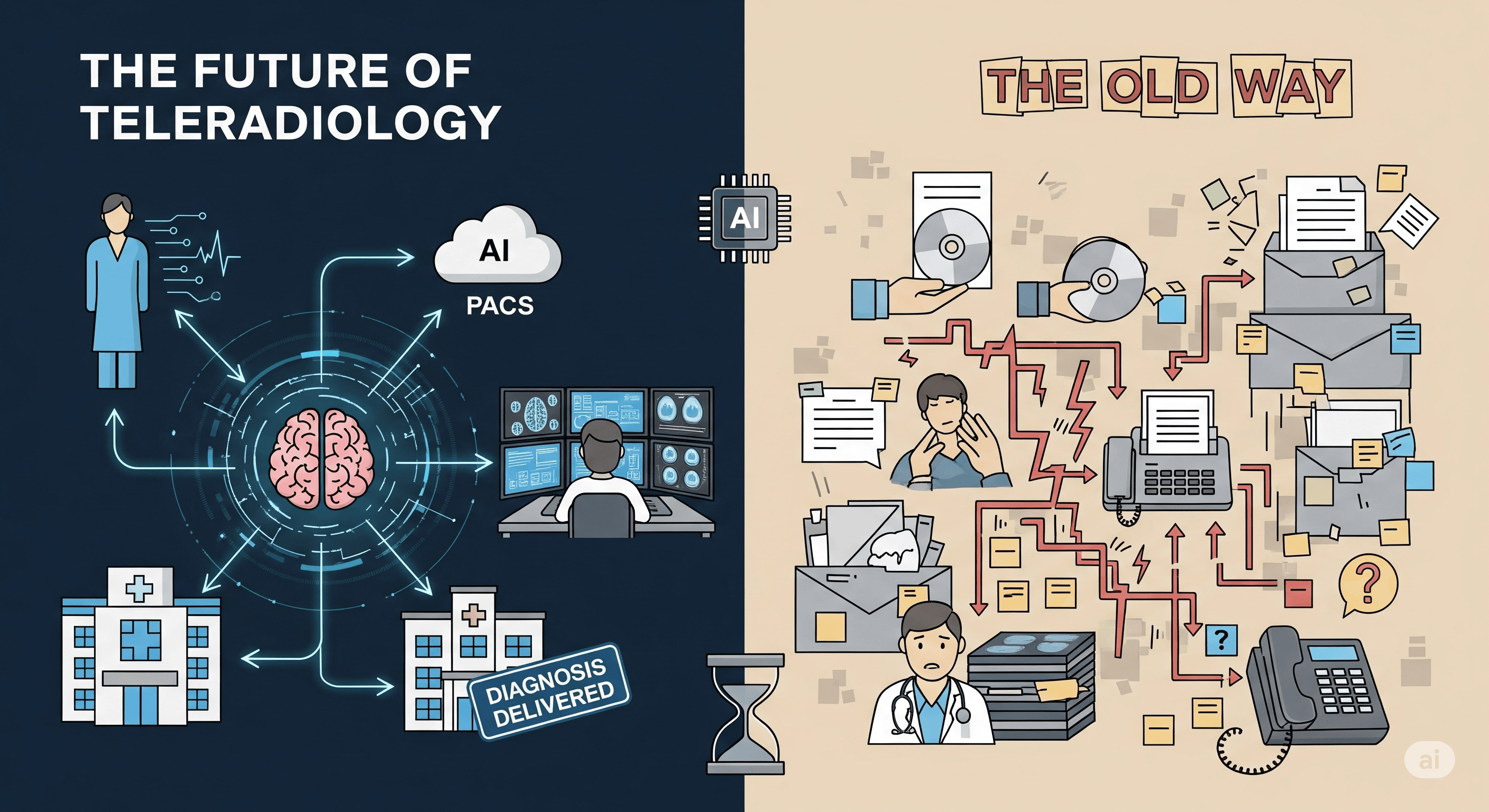
For years, teleradiology operated on outdated systems designed for an era of slower communication. Many radiology departments still depend on email chains, PDF attachments, and manual DICOM uploads to share studies. Reports move between platforms that don’t communicate with one another, forcing radiologists to constantly switch between viewers, PACS systems, and dictation tools.
In this environment, collaboration is fragmented. Delays occur when files go missing or get buried in inboxes. Critical follow-ups are sometimes missed, and patient care suffers. Quality assurance—when performed manually—often happens weeks later, offering little value for immediate correction or learning.
The problem isn’t just inefficiency—it’s systemic fragmentation. Each step in the workflow operates in isolation, which creates multiple points of failure. The modern healthcare landscape, with its rapidly growing imaging volumes, demands a smarter, integrated alternative.
This is where AI-enabled teleradiology steps in. Instead of relying on disconnected systems, AI-native platforms unify every stage of the workflow—from image acquisition to report delivery—on a single, intelligent interface.
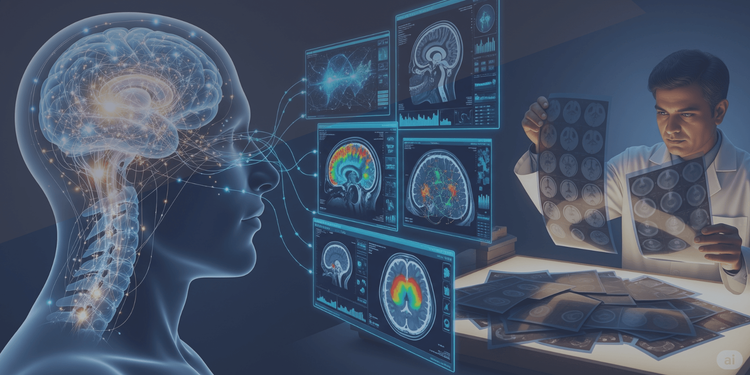
On arrival, studies undergo AI preprocessing that segments organs, detects potential anomalies, and structures metadata automatically. These AI-generated insights are not final diagnoses—they’re intelligent assistants that guide radiologists to what matters most, ensuring that no critical finding slips through.
From Fragmentation to Integration
How Do AI Platforms Transform the Radiologist’s Daily Experience
Radiologists today are under intense pressure. A single shift can involve hundreds of studies, each demanding precision, clarity, and consistency. In legacy systems, every extra click, login, or file transfer compounds fatigue. The repetitive nature of these tasks—combined with administrative overload—has become a leading factor in radiologist burnout.
The Burden of Traditional Systems
In conventional teleradiology, radiologists often face:
- Disorganized case queues with mismatched priorities
- Constant switching between disparate software tools
- Manual data entry for measurements and comparisons
- Inefficient communication with clinicians via emails or calls
These bottlenecks slow down reporting, introduce human error, and drain cognitive energy that could otherwise go into analysis and interpretation.
The AI-Native Advantage
AI-native teleradiology platforms eliminate much of this friction. Every case is automatically prioritized based on urgency, subspecialty, and prior workload distribution. The system matches each radiologist to the cases best suited to their expertise—whether that’s MSK, neuro, thoracic, or abdominal imaging.
AI tools assist by:
- Highlighting potential abnormalities
- Suggesting structured measurements
- Comparing new images with priors
- Flagging ambiguous or incomplete sections in reports
These tools empower radiologists to work smarter, not faster, enabling a deep focus on interpretation rather than administration. Real-time collaboration features allow radiologists and referring clinicians to exchange findings, annotate images, and clarify doubts instantly—all within the same platform.
The result? A frictionless, high-flow work environment where technology enhances rather than interrupts the human diagnostic process.
How AI Brings Transparency and Control to Hospital Operations
For hospitals and diagnostic networks, visibility into performance metrics has long been a blind spot. Traditional systems offer fragmented insights at best—manual spreadsheets, inconsistent timestamps, and irregular QA reviews.
With AI-powered teleradiology, this changes dramatically. Modern platforms integrate real-time analytics dashboards that track every key performance indicator automatically:
- Turnaround times per modality and urgency level
- Case distribution among radiologists
- Quality assurance trends and error rates
- Cost and utilization analytics
Administrators can identify bottlenecks before they escalate. For example, if turnaround times for CT scans spike during specific shifts, the system highlights the cause—whether it’s case volume, system latency, or staffing imbalance.
Moreover, AI-driven QA systems continuously monitor reporting quality, flagging incomplete anatomy evaluations or contradictory findings. This evidence-based approach to QA not only ensures consistency but also supports targeted training for radiologists, improving performance across the board.
By offering transparent, real-time oversight, AI-native teleradiology enables hospitals to make data-backed operational decisions while maintaining uncompromised quality and compliance.
Why Healthcare Organizations Are Moving to AI-Enabled Teleradiology
The momentum toward AI-native systems isn’t just about technology—it’s about solving fundamental problems in diagnostic care. Healthcare organizations that have transitioned to AI-enabled platforms report measurable gains across all dimensions of performance:
Turnaround Time: Automated triage and AI preprocessing significantly reduce report delivery times.
Diagnostic Accuracy: Integrated AI quality checks help catch contradictions and ensure complete anatomical coverage.
Collaboration: Built-in communication tools enhance radiologist-clinician coordination, reducing delays in decision-making.
Cost Efficiency: Utilization analytics allow smarter staffing, reducing overtime and idle capacity.
Scalability: Cloud-native infrastructure supports multi-location practices with consistent quality standards.
Migration may seem daunting, but the process is far smoother than most expect. Vendors like 5C AI provide end-to-end implementation support—from data migration and integration with existing PACS to radiologist training and workflow optimization. Within weeks, organizations can move from manual, email-driven chaos to a unified, AI-powered environment that scales effortlessly.
What makes AI-enabled teleradiology different from traditional systems
AI-enabled teleradiology unifies the entire workflow—from image acquisition to report delivery—on a single intelligent platform. Unlike legacy systems that rely on email chains, PDF attachments, and multiple disconnected tools, AI-native platforms automatically prioritize cases, preprocess images to detect anomalies, and enable real-time collaboration between radiologists and clinicians without constant software switching.
How does AI help radiologists work more efficiently
AI tools automatically highlight potential abnormalities, suggest structured measurements, compare new images with priors, and flag incomplete report sections. The system matches radiologists to cases based on their subspecialty expertise and prioritizes urgent studies automatically. This eliminates administrative burden and repetitive tasks, letting radiologists focus on clinical interpretation rather than data entry and manual coordination.
Do hospitals get better visibility with AI teleradiology
Yes, AI-powered platforms provide real-time analytics dashboards tracking turnaround times, case distribution, quality assurance trends, and utilization metrics automatically. Administrators can identify bottlenecks before they escalate and make data-backed operational decisions. AI-driven QA continuously monitors reporting quality and flags issues, enabling targeted radiologist training and maintaining consistent standards across all locations.SEE How Teleradiology Enables Expert Second Opinions in Radiology
The Future of Teleradiology: Human and AI Collaboration
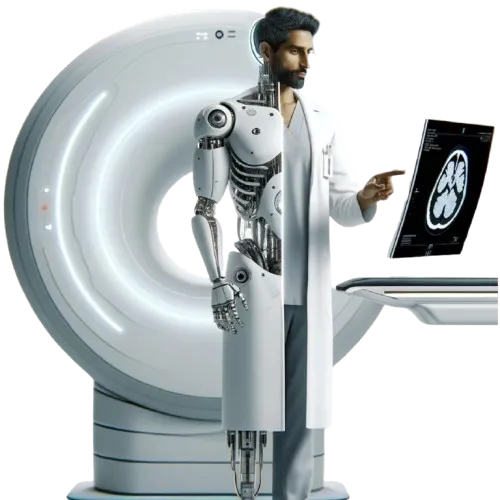
The rise of AI in teleradiology doesn’t mean replacing radiologists—it means amplifying their capabilities. The most successful platforms are built on collaboration: AI assists with repetitive or analytical tasks, while radiologists bring clinical judgment, nuance, and context that no algorithm can replicate.
As AI models evolve, they’re learning to understand clinical context—distinguishing between benign anomalies and urgent pathologies, and even predicting workflow bottlenecks based on patient data trends. The next generation of teleradiology systems will offer predictive QA, automatically alerting radiologists to high-risk areas before a report is even finalized.
In this hybrid model, AI doesn’t just optimize efficiency—it elevates quality. Every report becomes part of a continuous learning loop, where both humans and machines refine their performance together.
👉 Ready to transform your radiology operations? Book a demo today and see how AI-enabled workflows can unlock a new era of care delivery.