The Economics of Wellness: Accelerating Innovation in Hospital Ecosystems

Does a Bigger Economy Automatically Mean Better Health
The conventional wisdom often suggests that economic growth (increased GDP) naturally leads to less poverty, which in turn results in better health outcomes. This linear progression, however, is being challenged. A compelling argument suggests this order is fundamentally flawed, as evidenced by countries that spend a high percentage of GDP on healthcare yet report poor outcomes. The more effective sequence is: Better Health drives Increased Productivity, which then fuels a Stronger Economy, creating a self-sustaining cycle. Without health, economic activity is fundamentally curtailed—a reality often starkly highlighted by personal health crises.
What is Baumol’s Cost Disease and How Can AI Cure It
A core theoretical concept explaining rising healthcare costs is Baumol’s Cost Disease. This principle states that wages in a sector will increase alongside general economic productivity, even if the sector itself does not experience a corresponding increase in its own productivity. In healthcare, the productivity of a specialist doctor today, in terms of case volume, is not vastly different from two decades ago, yet their wages (rightfully) have increased. This gap between rising wages and static productivity drives up costs.
The power of Health AI lies in its potential to break this cycle. By automating and augmenting the workflow, AI can dramatically increase the specialist's productivity. It aims to transform the highly customized 'service' of healthcare (like a hand-made shoe) into a reproducible, efficient 'good' (like a mass-produced shoe), thereby bringing down the cost of access to quality diagnosis and care.
Where is Clinical Health AI Making a Real-World Impact Today
Health AI is no longer a futuristic concept; it is actively deployed and driving tangible clinical and operational benefits across three main areas:
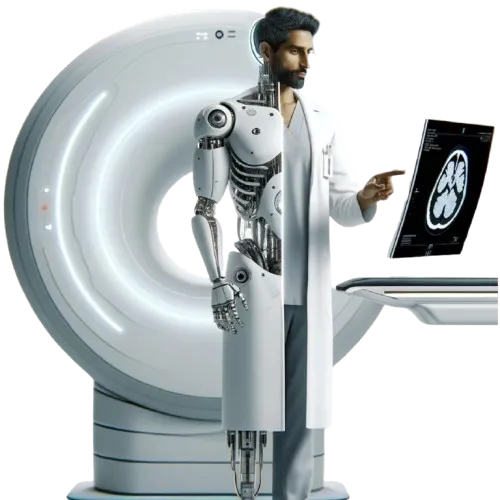
Productivity: AI-based tools, such as health scribes, can make physicians significantly more productive by eliminating time spent on documentation, allowing them to focus on patient interaction. In diagnostics, AI helps radiologists maintain high accuracy while tripling the volume of cases (e.g., reading 300-400 X-rays daily).
Access: By converting complex service tasks into reproducible, transportable goods, AI extends specialist capabilities to areas lacking sufficient medical personnel. This improves access to high-level expertise, such as having an expert intensive care nurse at every bedside, regardless of the hospital's location.
Prevention: Advanced AI-powered screening and generative tools are moving healthcare from 'sick care' to proactive wellness management. Comprehensive screening panels (including blood work and full-body MRI) can be analyzed by generative AI to provide personalized, preventative health management strategies.
How Can Hospitals Best Accelerate the Adoption of AI Innovation
For hospital leaders and administrators, the opportunity to integrate clinical Health AI is immense, accessible, and presents a clear case for a strong Return on Investment (ROI).
It is crucial for institutions to recognize that domestic, purpose-built solutions are often better equipped to solve India's unique and massive healthcare challenges than generic offerings from global big tech companies. Hospitals should proactively experiment with and deploy AI in their clinical workflows. Live dashboard examples show AI autonomously triaging thousands of daily cases, flagging potential surgery or emergency candidates, and explaining the reasoning—ensuring patients are routed to the correct care within minutes of a scan.
The technology is already here and CDSCO-approved, making it a standard, reliable component of modern clinical operations in thousands of healthcare centers. The future of healthcare is here; it is simply unevenly distributed.
The strategic adoption of Health AI is the definitive pathway to achieving better health outcomes, increased productivity, and a robust economy. The power to convert the valuable service of specialized care into a widely accessible good rests in these innovations. To understand the operational blueprints, the market dynamics, and the personal commitment driving this transformation, we invite you to explore the full conversation.