Is an AI-Native RIS Better Than Traditional Radiology Information Systems
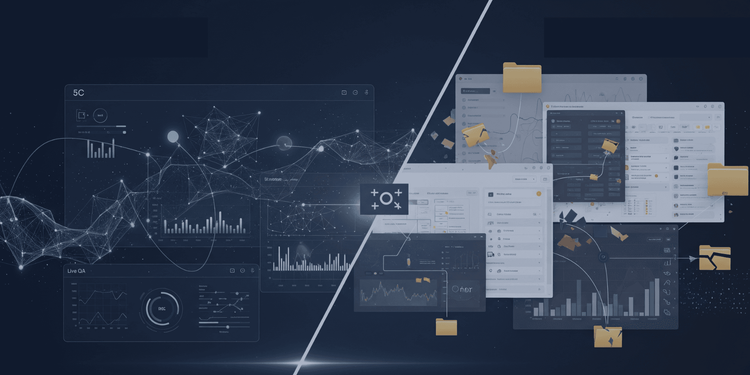
What's Broken in Traditional RIS Systems
For over two decades, Radiology Information Systems (RIS) have managed scheduling, reporting, and communication, but not optimized them. That design gap becomes painfully clear as radiology volumes surge, turnaround time targets shrink, and error tolerance hits zero.
Common Problems Hospitals Report
Fragmented Workflows: RIS, PACS, dictation, and QA live in separate silos, requiring multiple logins and manual handovers between systems that slow operations.
No Real-Time Visibility: Administrators have no live view into where reports are stuck or delayed. QA happens post-facto, not real-time when issues can be prevented.
Zero Intelligence: These systems don't learn, adapt, or assist. They're databases with a user interface not workflow engines that optimize performance.
Hard to Customize: Even minor changes require vendor intervention, long downtimes, or costly upgrades that delay necessary improvements.
Not Built for AI: Most RIS platforms bolt on third-party AI as an afterthought, leading to clunky integrations and poor return on investment.
The result: radiology teams are stretched, QA teams are blind, and hospital IT spends more time maintaining systems than improving care delivery. It's not a software problem, it's an architecture problem.
What is 5C’s Full-Stack AI-Native Radiology Platform
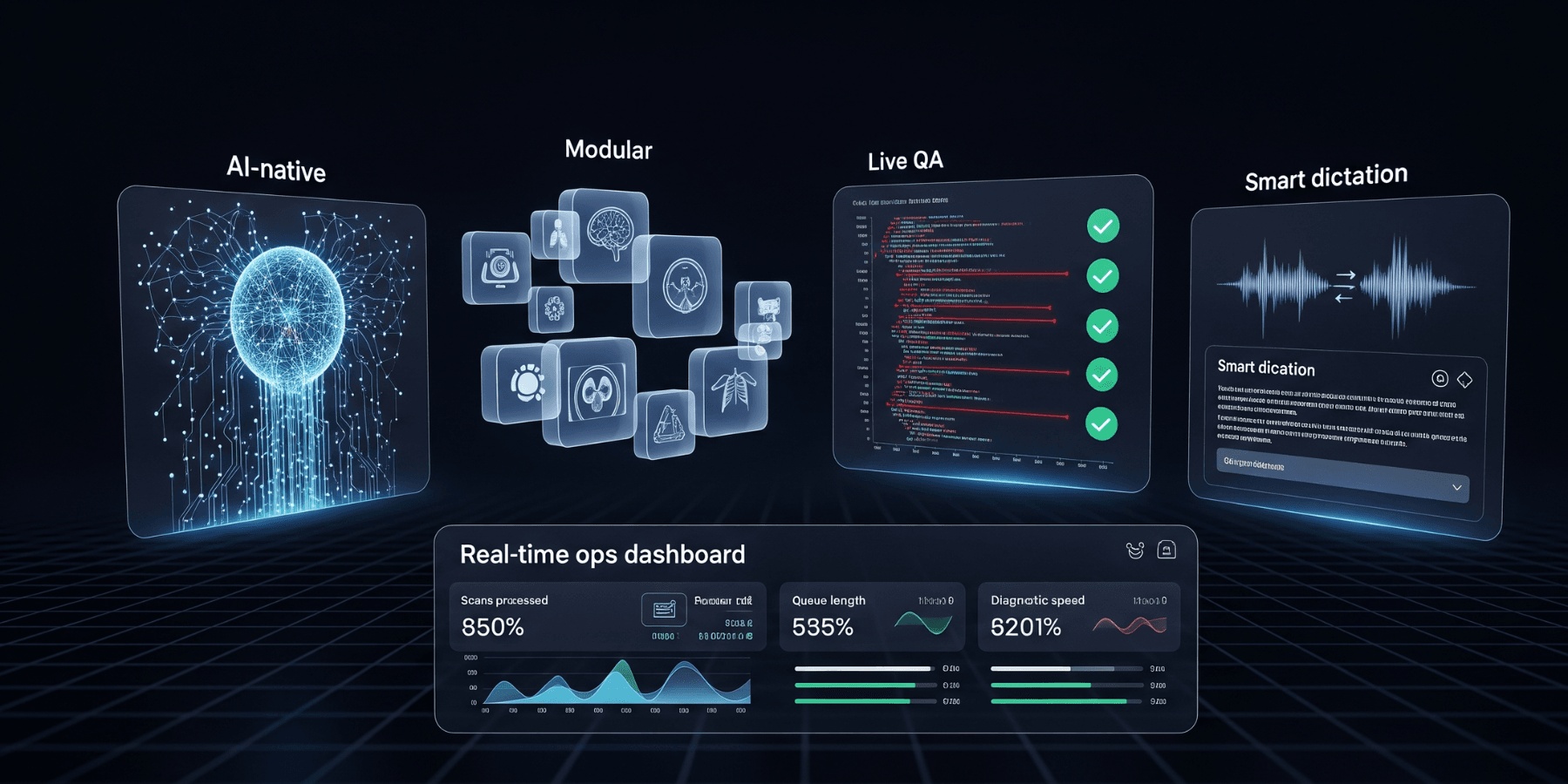
5C isn't a traditional RIS. It's a radiology operating system, modular, AI-native, and battle-tested in over 3,000 hospitals. The platform combines RIS, PACS, reporting, AI, and analytics into one seamless engine.
1. AI-Native Architecture
Where legacy RIS platforms are static record-keepers, 5C is dynamic and intelligent. Every workflow touchpoint image triage, report QA, dictation is enhanced by AI models.
Bionic Vision: Uses computer vision and Vision Language Models (VLMs) to identify fractures, bleeds, or missed findings in real-time during image analysis.
BionicLM: Acts as intelligent co-pilot for radiologists, improving report quality, coherence, and clinical relevance through natural language processing.
Hospitals using 5C aren't just documenting, they're detecting, reasoning, and reporting with artificial intelligence assistance.
2. Modular Plug-and-Play Design
You don't need to replace your entire technology stack. 5C's modular architecture lets you start with one component—like reporting or QA automation and expand over time as needs grow.
Each module is API-first, cloud-ready, and HL7/FHIR compliant. Integration works with existing PACS, EMRs, or even legacy RIS systems without requiring complete replacement.
3. Live QA and Error Prevention
Traditional QA is retrospective, checking reports after finalization. 5C's QA is real-time, preventing errors before they reach clinicians.
Built-in Quality Agents Check:
Contradictions (e.g., "normal" and "effusion" describing same finding)
Missing anatomical references (e.g., "is enlarged" without specifying organ)
Clinical mismatches (e.g., report doesn't address ordering physician's query)
This prevents errors before they reach clinicians and protects hospitals from downstream clinical and legal risk.
4. Smart Dictation and Reporting
Radiologists want speed, clarity and control, not rigid templates. 5C provides intelligent reporting tools that adapt to clinical needs.
Key Features:
Speech-to-structured-report via BionicVoice
Autocomplete with AI-suggested impressions based on findings
Smart templates that adapt to imaging findings and modality
Result: High-quality reports completed in under 2 minutes with 5× fewer corrections compared to traditional dictation workflows.
5. Real-Time Operations Dashboard
Every stakeholder from radiologists to hospital CIOs gets live visibility into radiology operations:
Live turnaround time tracking across all sites
Case prioritization based on clinical criticality
Automated follow-up triggers for recommended repeat imaging
Operations teams can intervene early when bottlenecks develop. Radiology teams gain visibility instead of working blind. Administrators optimize workflows instead of constantly firefighting issues.
What Hospital IT Teams Are Saying
Proven Results Across 3,000+ Hospitals
"We've cut turnaround times by 70%, and errors are down 40%."
— CIO, 700-bed multispecialty hospital
"We were shocked by how easy the integration was. Zero downtime."
— IT Lead, National Radiology Group
Rapid Implementation
5C doesn't require 6-month migrations or million-dollar consulting fees. Hospitals can go live in under 10 days with complete support from the clinical integration team.
The platform handles high volumes seamlessly—managing 3,000+ cases daily without performance degradation or system failures.
What is the difference between 5C and traditional RIS systems
Traditional RIS systems are static databases that manage scheduling and reporting but don't optimize workflows or provide intelligence. They operate in silos separate from PACS, dictation, and QA systems, requiring multiple logins and manual handovers. 5C is an AI-native radiology operating system that combines RIS, PACS, reporting, AI, and analytics into one seamless platform. It features real-time QA that prevents errors before reports are finalized, live visibility dashboards for tracking turnaround times, and AI models like Bionic Vision and BionicLM that enhance image analysis and report quality. 5C's modular design allows hospitals to implement components gradually without replacing their entire technology stack.
How quickly can hospitals implement 5C platform
Hospitals can go live with 5C in under 10 days, compared to the 6-month migrations typical of traditional RIS implementations. The platform's modular, API-first architecture integrates seamlessly with existing PACS, EMRs, and even legacy RIS systems without requiring complete replacement or costly downtime. 5C is HL7/FHIR compliant and cloud-ready, allowing hospitals to start with one component like reporting or QA automation and expand over time. The clinical integration team provides complete support throughout implementation, and the system handles high volumes of 3,000+ cases daily from day one without performance issues.
Does 5C reduce radiology reporting errors
Yes, 5C significantly reduces reporting errors through real-time QA and error prevention. Unlike traditional systems that check reports retrospectively after finalization, 5C's built-in Quality Agents check for issues during the reporting process—catching contradictions (like "normal" and "effusion" describing the same finding), missing anatomical references, and clinical mismatches where reports don't address the ordering physician's query. Hospitals using 5C report 40% fewer errors and require 5× fewer report corrections compared to traditional dictation workflows. This real-time prevention protects hospitals from downstream clinical and legal risks while ensuring higher quality patient care. READ MORE ABOUT BIONIC AI
Hospitals no longer need to choose between outdated RIS systems and AI point solutions that barely talk to each other. 5C offers a clean alternative: a single, AI-powered workflow that fits your current setup and evolves with your future needs.
Let’s build the radiology system your clinicians deserve.
👉 Talk to our team about a risk-free pilot.