MIT AI20, AI50, and the Responsibility of Building for India
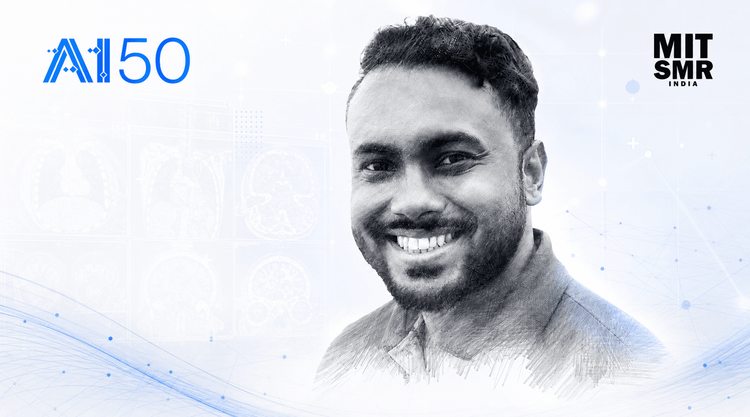
Being recognised by MIT Sloan Management Review India in the AI20, and personally in the AI50, is an honour. But for us, it is also a reminder: in Indian healthcare, innovation is not a slogan. It is a responsibility measured in scans, turnaround times, accuracy, access, and trust.
A Moment of Gratitude
5C Network's inclusion in MIT SMR India's AI20 is a proud moment for the company. My inclusion in the AI50 is deeply personal. Both recognitions matter because they come at a time when India's AI story is moving from promise to proof.
We are grateful to MIT SMR India for recognising a kind of AI work that is often less glamorous than consumer demos or frontier-model announcements: the patient, operational work of making healthcare systems faster, more reliable, and more accessible.
This recognition belongs to the entire 5C team, our radiologists, our hospital and diagnostic partners, and the clinicians who have pushed us to build systems that work in the real world, not just in presentations.
Why This Matters Beyond 5C
India has one of the most important AI opportunities in the world: applying intelligence to problems of population scale. Healthcare is where that opportunity becomes urgent. Radiology demand keeps rising, but specialist supply cannot expand at the same pace. Patients should not have to wait one or two days for a report because the right expert is not available in the right place at the right time.
MIT SMR India's profile captured the operating reality of what we are building: an AI-assisted radiology platform connecting hospitals and diagnostic centres with radiologists, processing thousands of scans every day, and reducing turnaround times from 24-48 hours to under 30 minutes in many cases.
The real achievement is not appearing on a list. The real achievement is making sure a patient in a smaller town can access specialist-grade radiology with the speed, consistency, and confidence that modern healthcare deserves.
AI in Healthcare Has to Be Earned
Healthcare is not an industry where AI can be judged by novelty alone. A model that looks impressive in a demo still has to survive clinical variation, workflow pressure, incomplete information, mixed equipment quality, urgent cases, edge cases, and human accountability.
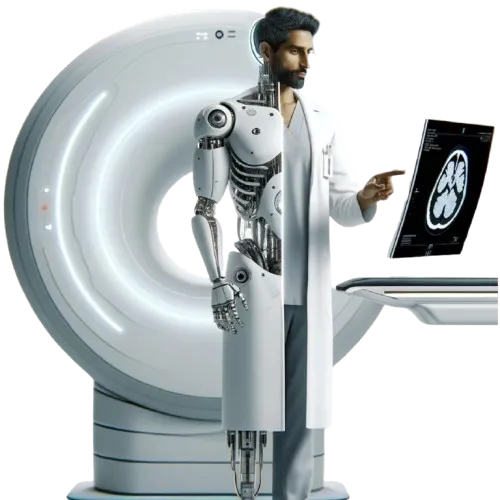
That is why our approach has always been bionic rather than purely automated. AI should not replace clinical judgement. It should strengthen it: by prioritising urgent scans, pre-reading images, generating structured support, reducing administrative friction, and learning from expert corrections every day.
Speed matters. A report that reaches a treating doctor faster can change the next clinical decision.
Reliability matters. Healthcare AI must work across the messy diversity of Indian clinical practice, not only on clean benchmark datasets.
Trust matters. Radiologists and physicians need systems that are transparent, auditable, and useful inside their actual workflows.
The Responsibility of Indian AI
India's AI leadership will not be defined only by who builds the largest model. It will be defined by who solves the hardest access problems at national scale. We have the data density, the workflow complexity, the engineering talent, and the urgency to build AI that the rest of the world can learn from.
But that opportunity comes with a higher bar. We cannot build AI that only works for elite hospitals, perfect inputs, or metro workflows. We have to build for district hospitals, late-night emergencies, variable infrastructure, and clinicians who need answers quickly without compromising quality.
The question for Indian AI is not just, "Can we innovate?" It is, "Can we innovate in a way that reaches the people who need it most?"
What Comes Next
For 5C, the answer is to keep building. Deeper AI assistance for radiologists. Better workflow intelligence for hospitals. Faster reporting without cutting corners. More robust quality systems. More learning loops between human expertise and machine intelligence. More access for patients who have historically been underserved by specialist healthcare infrastructure.
The AI20 and AI50 recognitions are encouraging because they show that this kind of applied, operational AI is being noticed. But they also raise the stakes. Every recognition creates a larger obligation to prove that the work can compound into real public value.
We are honoured. We are grateful. And most importantly, we are still building.