The Hard Truth About AI Radiology Tools in India: Why Most Fail at Scale
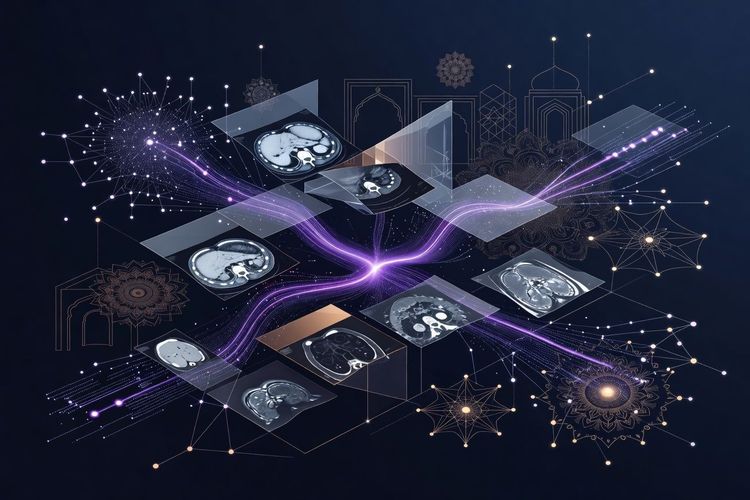
The gap between a controlled pilot and daily operation at Indian hospital volumes is where most AI radiology tools break.
India has become one of the most talked-about markets for AI in radiology. The numbers are compelling — massive scan volumes, a severe shortage of radiologists, and a clear need for faster, more consistent reporting. Yet despite the hype and the growing number of pilots, very few AI radiology tools have actually made it into sustained, high-volume clinical use across Indian hospitals.
The reason is rarely “the AI isn’t accurate enough.” The real problem is scale.
The Scale Problem No One Designs For
Most AI radiology tools are developed and validated in environments that look nothing like Indian hospitals.
They are typically trained on relatively clean, well-curated datasets from a handful of scanner vendors, with consistent protocols and patient populations that skew Western. When these tools encounter the reality of Indian practice — older CT and MRI machines, high patient throughput, variable image quality, different disease prevalence, and reporting workflows that demand sub-30-minute turnaround times — performance often degrades sharply.
The gap between a controlled pilot (usually run on a few hundred curated cases) and daily operation at 100–300+ scans per day is where most tools break.
Where Tools Typically Fail
Here are the recurring failure points we see:
Distribution shift: The model was never trained on the range of scanners, protocols, and patient body types common in India.
Workflow friction: The AI doesn’t integrate cleanly into existing RIS/PACS/reporting systems, creating extra clicks or parallel workflows that radiologists eventually abandon.
Speed and reliability under load: Tools that work in a demo environment slow down or throw too many low-confidence cases when running at real Indian hospital volumes.
Edge cases and rare findings: Models struggle with the long tail of Indian case mix (tuberculosis patterns, post-treatment changes, congenital anomalies, etc.).
Lack of continuous feedback loops: Once deployed, there is no systematic way for Indian radiologists to correct and retrain the model on local data.
The result? Promising pilots that quietly die after 3–6 months.
What Production-Ready Actually Requires
The tools that are succeeding at scale in India share a few common traits:
They are built with Indian data diversity from the beginning, not retrofitted later. They treat the radiologist as an active partner in the loop rather than trying to replace judgment. They are designed around the constraints of existing hospital infrastructure instead of requiring ideal conditions. And they include robust fallback mechanisms when the model is uncertain — because in high-volume Indian settings, “I don’t know” is a safer answer than a confident but wrong one.
Equally important, the winning implementations are usually embedded inside teleradiology workflows rather than bolted on as a separate layer. This allows the AI to operate at the speed and scale that Indian hospitals actually need.
A Practical Checklist for Hospital Leaders
If you’re evaluating AI radiology tools, here are questions worth asking vendors:
What percentage of your training data comes from Indian scanners and patient populations?
How does the system behave when image quality varies (older machines, motion artifacts, different kVp/mA settings)?
What is the real turnaround time impact once the tool is running at full hospital volume?
How are uncertain or out-of-distribution cases handled?
Can local radiologists systematically correct and improve the model over time?
Tools that cannot answer these questions clearly are likely to remain stuck in pilot mode.
The Path Forward
The next phase of AI in Indian radiology will not be won by the model with the highest published AUC. It will be won by systems that can reliably operate inside the messy, high-volume, resource-constrained reality of Indian healthcare delivery.
That is a much harder engineering and product problem than most people realize — but it is also where the real clinical and commercial value lies.