What Are the 10 Real-World AI Applications in Healthcare
What is the Real Impact of AI in Modern Healthcare
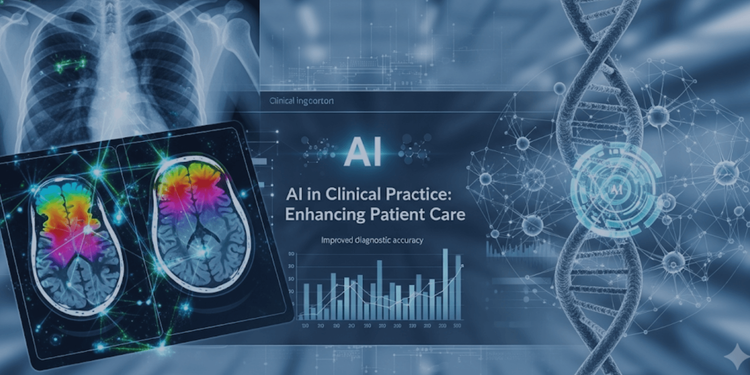
Artificial Intelligence (AI) is no longer a futuristic concept, it's a powerful reality transforming clinical care today. From detecting subtle fractures to identifying life-threatening conditions in seconds, AI systems are helping clinicians catch what the human eye might miss, enhance accuracy and ensure patients receive timely care.
In this article, we explore 10 real-world examples of how the 5C AI system is reshaping patient outcomes, streamlining workflows and redefining the role of technology in medicine. Learn more about BIONIC AI
1.Why Catching a Hidden Scaphoid Fracture matters?
Even skilled clinicians can miss tiny wrist fractures on X-rays.
What happened: AI identified a subtle, undisplaced scaphoid fracture that was overlooked on the initial image.
Why it mattered: MRI confirmed the fracture, wrist was immobilized immediately, preventing long-term joint damage and chronic wrist instability. READ MORE ABOUT MSK RADIOLOGY
2. Can AI Detect a Subtle Brain Bleed in Seconds?
In emergencies, every second truly counts.
What happened: AI detected a tiny subarachnoid hemorrhage in the basal cisterns of a CT brain scan in under a minute.
Why it mattered: Rapid detection triggered an immediate neurosurgical review, cutting door-to-drill time and improving the patient’s survival odds. SEE HOW 5C's HELPING ED WITH NIGHT REPORTING
3. Did AI Help Detect a Missed Pneumothorax?
Some Chest x-rays may be tricky.
What happened: AI flagged a small apical pneumothorax that hadn’t been reported initially.
Why it mattered: The prompt alert led to an urgent chest drain placement, stabilizing the patient and preventing a potentially fatal collapse.
4. Can AI Find Cancer Early?
Sometimes, AI finds what no one was even looking for.
What Happened: AI detected multiple lytic skull lesions suggesting myeloma on a routine head CT.
Why It Mattered: Oncology workup started immediately, enabling early treatment initiation before disease progression, dramatically improving patient prognosis.
5. How Does AI Catch Life-Threatening Conditions?
A scan for something minor can sometimes reveal something major.
What Happened: AI identified an intimal flap indicating aortic dissection on a routine chest CT ordered for persistent cough evaluation.
Why It Mattered: The detection immediately escalated the case to vascular surgery, preventing potential rupture and saving a life.
6. How Did AI Prevent a Missed Follow-Up Appointment?
Missed follow-ups can delay critical care—but AI can help.
What Happened: AI system flagged a patient who missed a recommended 6-month follow-up scan for a complex ovarian cyst.
Why It Mattered: Follow-up scan revealed early-stage malignancy, enabling timely intervention with better treatment outcomes.
7. Does AI Check Entire Scans?
AI doesn’t stop at the study’s focus—it analyzes everything.
What Happened: AI detected a T12 compression fracture on CT Abdomen scan, outside the primary area of clinical interest.
Why It Mattered: Orthopedic referral led to vertebroplasty within 48 hours, providing immediate pain relief and restoring patient mobility.
8. Can AI Prevent Medical Errors?
Even small labeling mistakes can lead to serious consequences.
What Happened: AI caught a left/right side mismatch in chest X-ray findings before the radiology report was finalized.
Why It Mattered: The correction prevented a potential treatment error, maintaining patient safety and diagnostic accuracy.
9. How Does AI Monitor Post-Op Recovery?
Post-op imaging can reveal subtle but urgent issues.
What Happened: AI detected new loculated pleural effusion and basal lung collapse on post-operative chest X-ray after thoracic surgery.
Why It Mattered: Surgeon alerted the same day, re-intervention performed immediately, leading to faster patient recovery and shorter hospital stay.
10. Can AI Improve Chronic Care Continuity?
AI can connect the dots across multiple scans and timeframes.
What Happened: AI identified that a prior stroke visible on old scans wasn't mentioned in the current CT Brain report.
Why It Mattered: Neurology review triggered, comprehensive secondary stroke prevention plan created, reducing risk of future strokes and improving long-term outcomes.
Why AI Improves Healthcare Outcomes
Precision: AI analyzes every pixel consistently without fatigue, detecting subtle findings even under high workload pressure. Human radiologists can miss small details during busy shifts, but AI maintains constant attention to every scan.
Speed: Critical conditions flagged in seconds enable faster treatment decisions. Brain bleeds detected in under 60 seconds, aortic dissections identified immediately, every second counts in emergency situations where delayed diagnosis means higher mortality.
Continuity: Automated follow-up tracking ensures no patient falls through cracks. Healthcare systems struggle with follow-up compliance, but AI remembers every recommendation and alerts clinicians when patients need to return.
Quality Assurance: Real-time error detection catches mistakes before reports reach patients. Left-right errors, measurement mistakes and missed findings are flagged for correction, improving overall diagnostic accuracy.
How accurate is AI in detecting medical conditions that radiologists miss
5C AI has proven accuracy in detecting subtle findings during real-world deployments. The system identifies un-displaced fractures, small pneumothorax, brain bleeds in under 60 seconds, and incidental lesions that may be overlooked during routine readings. AI works alongside radiologists as a second check, flagging findings for human review rather than making final diagnoses independently.
Does AI replace radiologists or just assist them
AI does not replace radiologists—it assists them. The 5C AI system flags potential findings, catches subtle abnormalities, and performs quality checks, but radiologists make all final diagnostic decisions. AI handles repetitive screening tasks and error checking, allowing radiologists to focus on complex cases requiring human expertise and clinical judgment.
How fast can AI detect life-threatening conditions in emergency situations
5C AI detects critical conditions like brain hemorrhages in under 60 seconds from scan completion. The system immediately flags life-threatening findings such as aortic dissections, pneumothorax, and intracranial bleeds, sending instant alerts to radiologists and emergency physicians. This speed enables faster treatment decisions, reducing door-to-drill time in emergencies and improving patient survival rates.
Ready to see AI transform your practice? Explore how tools like 5C are redefining healthcare and improving lives, one scan at a time. Explore Now!
Recommended Reading
See how Autonomous AI is used for Multi-Pathology Detection in Chest X-Rays
Reducing Burnout in Radiologists with AI Tools
Understand how AI alleviates the workload and stress faced by radiologists, improving their well-being.