What a PACS actually is
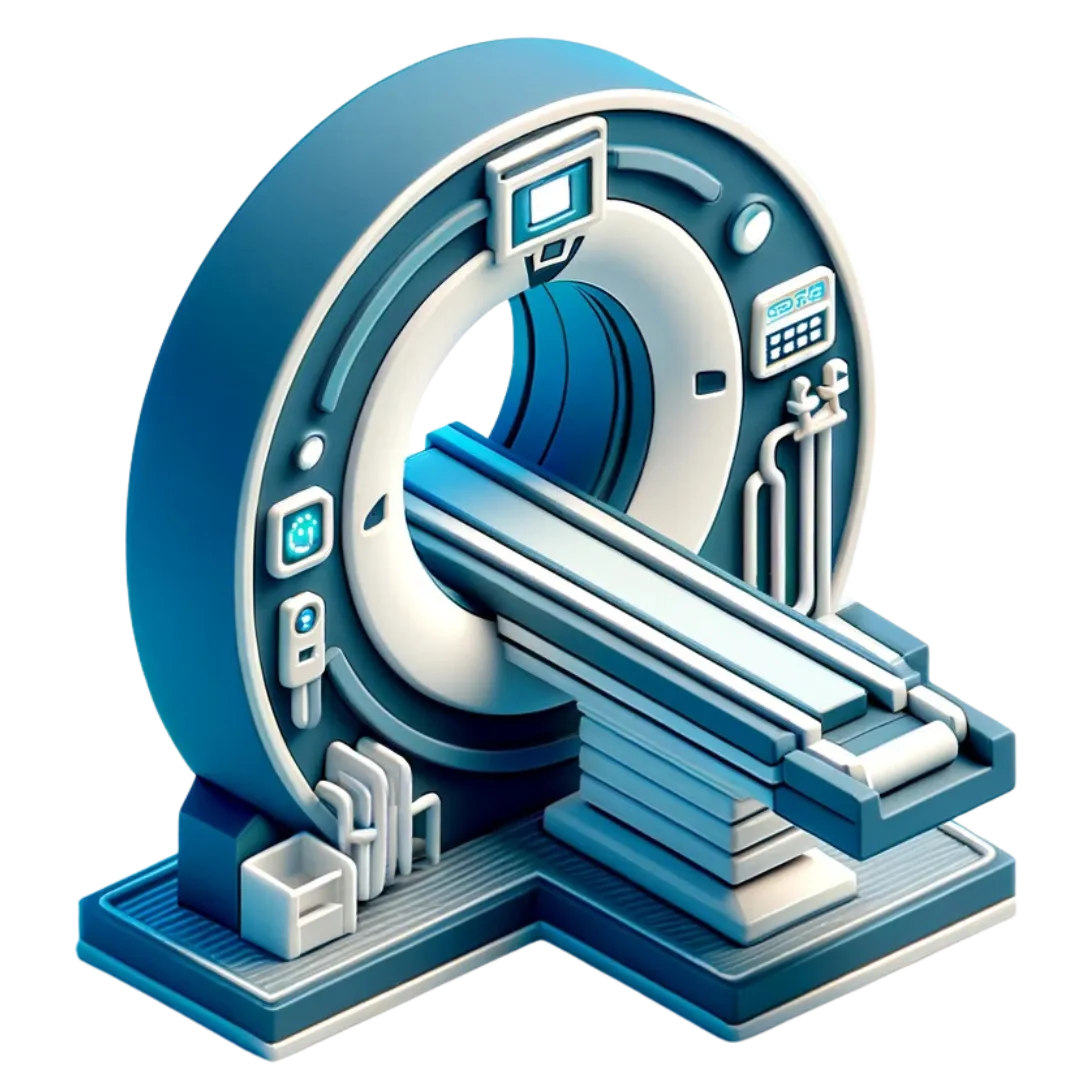
A PACS (Picture Archiving and Communication System) is the system a hospital uses to store, retrieve, distribute and display medical images from every imaging modality, replacing physical film with a digital archive that communicates with scanners, workstations and other hospital systems through the DICOM standard.
Four functions define it: archiving (every study, retained for years, retrievable in seconds), communication (moving studies between modalities, reading stations and sites over DICOM), display (diagnostic-quality viewers for radiologists, lighter web viewers for everyone else), and workflow hooks (worklists, prior-study fetching, routing rules). As a category, PACS handles every modality a hospital runs — CT, MRI, X-ray, mammography, ultrasound, nuclear medicine — because anything that speaks DICOM can be archived.
What a PACS is not: it is not the RIS (which schedules patients and manages the reporting workflow over HL7), not the EMR (the hospital-wide patient record that receives the finished report), and — a distinction that trips up many buyers — not the thing that produces the radiology report. A hospital can have a flawless PACS and still wait 24 hours for reads. In most of the market the archive and the reporting capacity are separate purchases, and this guide treats them separately — until the final sections, which cover the newer architecture where they are one system.
How hospitals really buy a PACS
Strip away the feature checklists and six variables decide most PACS purchases:
- Modality mix and study volume. A 50-bed hospital doing 30 studies a day and a multi-site system doing 3,000 are shopping in different markets. Volume drives storage, licensing tier, viewer performance requirements and which vendors will even bid. Be honest about growth: volumes rarely go down.
- DICOM conformance and integration surface. Every credible PACS speaks DICOM, so the real questions are at the edges: DICOMweb support for modern viewers and AI tools, HL7/FHIR integration with RIS and EMR, handling of non-DICOM sources (visible light, scanned documents), and how many weeks the integration project actually takes.
- Storage growth. Imaging archives only grow — thin-slice CT and digital breast tomosynthesis studies run to hundreds of megabytes each, and medico-legal retention rules commonly require studies be kept for many years (longer for paediatric patients). Model the archive at year seven, not year one, and ask what tiered or compressed storage costs at that size.
- Disaster recovery and uptime. When the PACS is down, radiology stops. Interrogate the real architecture: recovery time and recovery point objectives in the contract, whether DR is a second live site or a cold backup, and what the downtime workflow looks like at 2 a.m.
- RIS/EMR fit. The PACS lives inside an ecosystem. Verify bidirectional order and report flow with your RIS and EMR, single sign-on and patient-context sharing for clinicians, and whether the vendor has done your specific EMR combination before — in production, not in a slide.
- Exit terms. The most under-negotiated clause in the deal. Who owns the archive, in what format can it be exported, what does migration assistance cost, and what happens to access during a dispute? Data migration between PACS vendors is a months-long project; hospitals that skip this clause pay for it a decade later.
Cloud, on-premise, hybrid: what each really costs
PACS vendors quote rather than publish prices, and any guide that gives you a single number is guessing. What can be compared honestly is the structure of the cost, which differs completely across the three deployment models.
| Model | Cost structure | Best suited to |
|---|---|---|
| On-premise | Capex-heavy: perpetual licence + servers, storage, workstations, integration project. Then annual maintenance contract, IT staff, DR infrastructure, and a hardware refresh every 5–7 years. | High, stable single-site volume; strict data-localisation; strong in-house IT. |
| Cloud | Opex: subscription (per modality, user or site) or per-study fee. Hosting, upgrades and usually DR bundled in. Watch for data-egress and migration charges, and multi-year commitments. | Multi-site access, remote reading, limited IT staff, low upfront capital. |
| Hybrid | Mixed: on-premise cache (speed, business continuity) + cloud long-term archive and DR. Two cost lines, one smaller than a full on-premise build. | Larger hospitals wanting cloud economics without betting reading speed on the internet link. |
For scale: published industry estimates put small imaging-centre PACS deployments in the tens of thousands of dollars, and full hospital-wide enterprise implementations anywhere from hundreds of thousands to several million, with annual maintenance reaching six figures at the top end. Treat those as orders of magnitude, not quotes. The only comparison that holds up across models is total cost per study over five to seven years — licence or subscription, storage at year-seven volumes, integration, staffing, DR and the refresh cycle, divided by the studies you will actually do.
The market's direction is unambiguous: cloud and hybrid deployments are taking a growing share of new purchases, because multi-site health systems and remote reading make the on-premise model's geography a liability. But direction is not destiny for your hospital — a high-volume single site with good IT can still run on-premise economically. Structure first, then vendor.
The global vendor landscape, by category
The platforms below are among the most established or most-cited globally in 2026. Descriptions are neutral; verify current capabilities and regional availability directly with vendors, and use independent evaluations such as KLAS for your region and size class.
Enterprise imaging platforms
Sectra
The Swedish vendor is the customer-satisfaction benchmark of the category: Sectra PACS has been ranked Best in KLAS in the US for 13 consecutive years through 2026, with further wins across Europe, the Middle East/Africa and Oceania, and it rated highest among PACS handling 300,000+ studies a year. Sectra manages roughly 170 million imaging exams annually worldwide, and the radiology module sits inside a broader enterprise platform with a vendor-neutral archive plus pathology, cardiology, orthopaedics and ophthalmology modules. The reference shortlist entry for large, multi-site health systems.
GE HealthCare — True PACS and Centricity
GE HealthCare's current-generation True PACS combines Universal Viewer, Enterprise Archive and zero-footprint web viewing with an AI Orchestrator that routes studies to third-party algorithms (built in collaboration with Blackford), on top of one of the largest installed PACS bases in the world through the Centricity line. Its modular, web-based architecture supports distributed and remote reading. A natural fit for hospitals already standardised on GE modalities or consolidating vendors.
Philips — Vue PACS and HealthSuite Imaging
Philips runs one of the largest enterprise imaging franchises (Vue PACS, acquired with Carestream's healthcare IT business) and has pushed it decisively to the cloud: HealthSuite Imaging, launched on AWS, delivers archiving, viewing, diagnostic reading, reporting and AI-enabled workflow orchestration as cloud services, with a 99.99% uptime commitment for mission-critical services and a zero-footprint diagnostic viewer in its latest release. A strong candidate for systems that want an enterprise vendor already committed to cloud delivery.
Fujifilm Synapse
One of the longest-established PACS product families, Synapse pairs enterprise PACS with a fully integrated Synapse RIS and vendor-neutral archive, and is deployed by large hospitals and imaging chains across every region — including a substantial installed base in Asia. Suits organisations that want a single international vendor spanning archive, viewer and radiology workflow. As with any enterprise suite, implementation is a project measured in months; budget for it.
Also regularly on enterprise shortlists: Agfa HealthCare, Merative (Merge), Intelerad and Visage Imaging. Their omission here is space, not judgement.
Mid-market and cloud-native vendors
RamSoft
A cloud-native radiology software vendor whose OmegaAI platform is a ground-up, browser-based rebuild — imaging, reporting and analytics in one cloud service — aimed at outpatient radiology groups and imaging centres rather than 1,000-bed health systems. Representative of the segment where subscription pricing, fast deployment and low IT overhead beat enterprise feature depth.
Paxera Health
An AI-oriented imaging platform spanning PACS, RIS and viewers, and a consistent presence among the notable mid-market vendors in independent market analyses. Vendors in this class typically win on price-to-capability ratio for single hospitals and regional groups — the diligence points are regional support presence and reference sites at your scale.
Open source
Orthanc (and the open-source stack)
Orthanc — a lightweight, scriptable DICOM server with a REST API (GPLv3), developed at University Hospital of Liège — is the most common open-source choice for a self-hosted mini-PACS, typically paired with the OHIF web viewer, or dcm4chee for a heavier enterprise archive. The licence is free; the deployment is not: you own integration, security hardening, backups, upgrades and 2 a.m. support, or you buy them from the commercial ecosystems around these projects. Viable plumbing for technically strong institutions and a common choice for research and secondary archives. Full breakdown in our guide to open-source radiology AI tools.
The integrated route: PACS, AI and reporting as one system
SuperPACS (5C Network)
Every other option on this page gives you an archive and leaves the AI and the reporting as separate purchases. SuperPACS is 5C Network's PACS, and its premise is the opposite: it is built on the production AI infrastructure that runs one of the world's largest radiology networks — 20,000+ studies a day for 2,000+ facilities — so the archive, the Bionic AI engine, the Prodigi RIS and a 400+ radiologist reporting network are one system, not an integration project. Disclosure: this is our product. The product page is at 5C SuperPACS, and interested hospitals and diagnostic centres can register interest. For a side-by-side of the PACS actually sold in India, see the best PACS software in India comparison. It is covered in full in the 5C section below.
AI is now a PACS decision
Every vendor now says “AI-enabled.” The useful question is where the AI runs and who operates it — there are three architectures, and they can coexist:
- AI inside the PACS. Native features — worklist prioritisation, hanging protocols, workflow analytics — shipped by the PACS vendor itself. Convenient, but you get that vendor's roadmap and no one else's.
- AI marketplaces and orchestrators. A routing layer that sends studies from your PACS to third-party algorithms and returns results into the viewer — the model behind GE HealthCare's AI Orchestrator with Blackford, and equivalents across the enterprise vendors. Flexible, but the hospital still buys, validates and monitors each algorithm, and someone must own what happens when the AI flags something.
- AI-native infrastructure. The AI is not bolted onto the archive — the archive, the AI and the reporting workflow are designed as one system, so studies are triaged, pre-read, reported and quality-checked inside the same platform that stores them. This is the architecture 5C Network builds, and the premise behind SuperPACS.
The practical consequence for buyers: you rarely need to replace a PACS to get AI — a DICOM-compliant archive from any vendor on this page can feed AI tools and reporting services, and what matters in the contract is that the plumbing stays open (DICOM export and auto-forwarding without per-destination fees, DICOMweb access, no contractual lock on where your own studies may be sent). The strategic question is different: whether you want to keep operating the seams between three systems, or move to infrastructure where there are no seams to operate.
The India view
Most of this guide applies anywhere; India adds four specifics. First, home-grown RIS-PACS vendors are genuinely competitive on price and local support — Medsynapse (Medsynaptic, Pune) and RADSpa (Telerad Tech, Bengaluru) are among the most widely deployed, and are profiled in our companion guide to radiology reporting software in India. Second, data protection now has teeth: the DPDP Act makes the hospital accountable for patient data handed to processors, so vendor certifications (ISO 27001 as baseline) and clarity on where data resides matter in India exactly as HIPAA and GDPR make them matter elsewhere. Third, NABH accreditation rewards what a good PACS makes demonstrable — audit trails, access control, retention discipline. Fourth, the sharpest India-specific trap: scanner-bundled PACS. Equipment vendors often bundle a basic PACS with a new CT or MRI; it looks free, but it tends to lock the archive to the scanner vendor and break the open DICOM routing that AI and teleradiology integration depend on. Negotiate the PACS on its own merits.
The radiologist-supply problem also reshapes the decision. In markets with deep radiologist coverage, the PACS purchase and the reporting question are separable. In India — roughly one radiologist per 100,000 people — the archive is often the easy half, and the binding constraint is who reads the studies. That is why many Indian hospitals pair a modest PACS with an outsourced AI-native reporting layer rather than over-investing in enterprise software.
SuperPACS. One system.
SuperPACS is 5C Network's PACS — a picture archiving and communication system built on the production AI infrastructure of one of the world's largest radiology networks, where the archive, the Bionic AI engine, the Prodigi RIS and a 400+ radiologist reporting network operate as one system. The rest of this guide describes a market where hospitals buy the archive from one vendor, the AI from a second and the reporting capacity from a third, then own the seams between them. SuperPACS exists because 5C already runs all three at scale — 20,000+ studies a day for 2,000+ facilities, with a ~30-minute average reporting loop across X-ray, CT, MRI and mammography — and the PACS hospitals actually need is the one wired into that system from the start.
- One system, not three procurements. Image archiving and routing, Bionic AI pre-reads across hundreds of pathologies, structured reporting with NMC-registered radiologist sign-off, and automated quality control on every report — the same platform, not an integration project. Prodigi, 5C's radiology information system (licensed alongside the Bionic Suite as a Class B medical device under India's Medical Devices Rules, 2017), runs the departmental workflow.
- Proven infrastructure, honest status. SuperPACS is built on the systems that already move 5C's daily volume in production. Public feature specifications and pricing are not yet published — this guide will not invent them. Hospitals and diagnostic centres that want PACS, AI and reporting as one decision can register interest today.
- 5C meets you where you are. The integrated route is not a prerequisite: 5C connects to any existing DICOM-compliant PACS — any vendor in this guide — in about 72 hours, with no additional hardware, and starts reporting. Facilities can begin on the PACS they own and adopt SuperPACS when the archive decision comes up.
- The cost logic. 5C's reporting is priced pay-per-scan with no retainer, converting reporting from a fixed licence-and-staffing line into a variable cost per signed study — the economics the rest of this guide says to compare everything against.
If your archive works and only your turnaround hurts, route studies to 5C's platform and keep everything else. If you are buying or replacing a PACS in the next planning cycle, SuperPACS is the option where the PACS decision and the reporting decision stop being separate problems.
What no guide can decide for you
No price quotes — every serious PACS deal is quoted against your volumes, and any number printed here would be fiction. No ranking — Best in KLAS data is real but region- and size-specific, and your EMR combination can matter more than any league table. No substitute for a proof of concept: insist on a demonstration with your own studies on your own network, get integration timelines, uptime commitments and exit terms in writing, and call two reference sites of your size that run your EMR. And no verdict on vendors we haven't named — the mid-market especially is wide, and a regional vendor with strong local support can beat a global name for a single hospital.
Choose by situation
- Multi-site health system consolidating imaging. Shortlist enterprise platforms — Sectra, GE HealthCare, Philips, Fujifilm — evaluate against your EMR, and weight DR architecture and exit terms as heavily as viewer features.
- Single hospital or imaging-centre group without a big IT team. Cloud-native mid-market vendors (RamSoft, Paxera Health and their peers) for subscription economics and fast deployment; verify data residency and support hours for your region.
- Technically strong institution, research archive, or tight budget with real engineers. Orthanc plus OHIF is proven plumbing — go in with eyes open about who carries support, and read the open-source guide first.
- Indian hospital or diagnostic centre. Add Medsynapse and RADSpa to the shortlist, refuse scanner-bundled lock-in, and check DPDP-relevant certifications — full detail in the India software guide.
- You want the PACS, the AI and the reporting to be one decision, not three. That is what SuperPACS is for — 5C's PACS on the infrastructure that already reads 20,000+ studies a day. Register interest.
- Your archive is fine; your reports are slow. That is not a PACS problem. 5C connects to the PACS you already own over standard DICOM in about 72 hours — talk to 5C about what per-study reporting looks like on your volumes.
Frequently asked questions
What is a PACS in a hospital?
A PACS (Picture Archiving and Communication System) is the system a hospital uses to store, retrieve, distribute and display medical images from every imaging modality, replacing physical film with a digital archive that communicates with scanners, workstations and other hospital systems through the DICOM standard. In practice it is the memory and the screen of the radiology department: the CT, MRI, X-ray or mammography unit sends each study to the PACS, radiologists read from PACS workstations or web viewers, and referring clinicians pull up the same images anywhere in the hospital. The report itself is usually written in a RIS or reporting system, not in the PACS.
How much does a PACS cost?
Vendors quote rather than publish, so compare cost structures, not headline prices. On-premise PACS is capital expenditure: a perpetual licence plus servers, storage and workstations, then an annual maintenance contract, IT staffing, disaster-recovery infrastructure and a hardware refresh every five to seven years. Cloud PACS is operating expenditure: a subscription or per-study fee that bundles hosting, upgrades and usually disaster recovery. Published industry estimates range from tens of thousands of dollars for a small imaging-centre PACS to several million for hospital-wide enterprise deployments, with six-figure annual maintenance at the top end. The honest comparison is total cost per study over five to seven years, including storage growth and staff — not year-one price.
Is cloud PACS secure enough for a hospital?
Yes, when implemented properly — security depends far more on governance and architecture than on where the servers sit. A well-run cloud PACS encrypts data in transit (TLS 1.2+) and at rest (AES-256), enforces role-based access control and multi-factor authentication, keeps audit logs, and is backed by contractual commitments — a Business Associate Agreement under HIPAA in the US, or equivalent processor agreements under GDPR and India's DPDP Act. A poorly patched on-premise server behind a hospital firewall is often the weaker option. The questions to ask any vendor: where exactly does data reside, what certifications does the vendor itself hold (ISO 27001 as baseline), and can data residency requirements in your country be met.
What is the difference between PACS, RIS and EMR?
They manage different things. The PACS manages the images: storage, retrieval, distribution and display of DICOM studies. The RIS (Radiology Information System) manages the radiology workflow: scheduling, technologist worklists, study tracking, reporting and billing — it speaks HL7 rather than DICOM. The EMR (or EHR) is the hospital-wide patient record used by ordering clinicians; it receives the finished radiology report and often a link to the images, but does not store the DICOM data or run the imaging workflow. A functioning radiology department needs all three integrated: orders flow from EMR to RIS, images from modality to PACS, and signed reports back from RIS to EMR.
Cloud PACS vs on-premise PACS — which is better for a hospital?
Neither wins universally; the deployment model should follow your constraints. Cloud suits hospitals that want minimal upfront capital, multi-site and remote access, built-in disaster recovery, and a smaller radiology IT footprint — the direction most of the market is moving. On-premise still makes sense for very high, stable single-site volumes with a capable IT team, for strict data-localisation environments, and where internet bandwidth is unreliable, since a local cache keeps reading fast. Hybrid — an on-premise cache for speed with a cloud archive for long-term storage and DR — is increasingly the pragmatic default for larger hospitals. Whichever you pick, negotiate exit terms first: who owns the archive, in what format, and what migration costs.
Do we need to replace our PACS to use AI in radiology?
Usually not. There are three ways AI reaches a radiology workflow: AI built into the PACS itself, AI marketplaces or orchestrators that route studies from your existing PACS to third-party algorithms (the approach GE HealthCare takes with Blackford, and most enterprise vendors now offer some form of), and AI-native platforms where the studies are read and reported directly — forwarded over standard DICOM, with AI-assisted, radiologist-signed reports coming back. 5C Network supports both ends of that spectrum: it connects to any DICOM-compliant PACS in about 72 hours with no hardware, and for hospitals that would rather run one system than stitch three together, SuperPACS makes the archive, the AI and the reporting network the same platform.
What is SuperPACS by 5C Network?
SuperPACS is 5C Network's PACS — a picture archiving and communication system built on the production AI infrastructure of one of the world's largest radiology networks, which reads 20,000+ studies a day for 2,000+ facilities. What distinguishes it is integration: the archive, the Bionic AI engine (pathology detection, structured reporting, automated quality control), the Prodigi RIS and 5C's 400+ radiologist reporting network operate as one system rather than three separate procurements. It is aimed at hospitals and diagnostic centres that want the PACS, the AI and the reporting to arrive together. Public specifications are not yet published; interested teams can register interest through 5C's contact page, and facilities on an existing PACS can still connect to 5C's reporting over standard DICOM in about 72 hours.
On an existing PACS? 5C connects over standard DICOM in about 72 hours — AI pre-reads, radiologist-signed structured reports, pay-per-scan. Buying or replacing one? Ask about SuperPACS — one system, built on the production AI infrastructure that reads 20,000+ studies a day. Tell us your modality mix and volumes; the conversation stays on this page.
Talk to us about SuperPACS and the Radiology Operating System
Tell us where to reach you — a 5C radiology consultant responds within one business day.
Want the architecture first? Explore the Platform